Quick answer
Choose hardwired or plug-in bedside wall lights from the room's electrical and operational plan. Hardwired fittings need a verified permanent supply and installation detail; plug-in fittings need a suitable outlet, visible-cord plan and tamper review. Confirm the exact product's approved connection method.
Hardwired versus plug-in bedside wall lights is an installation and operations decision, not only a style choice. A hardwired fitting needs a verified permanent supply and compatible wall or headboard detail. A plug-in fitting needs a suitable outlet, a safe cord route and a plan for guest handling and housekeeping. In a hotel, confirm the exact luminaire's approved connection method before deciding; a similar looking residential model may have a different electrical construction.
Start with the existing room electrical plan
Locate the real supply, switching circuit and any unswitched outlet. Note whether the headboard is fixed, removable or part of a renovation. Identify who can access the connection and what happens when a unit is replaced. A proposed position that looks clear in an elevation may conflict with the wall build-up, joinery rail or cable route.
Ask a qualified electrician to check the design against the destination market's electrical rules. The article does not specify wiring methods or permit a plug-in product to be converted into a hardwired one. Such a conversion may change the product's safety basis and should only be considered with manufacturer documentation and professional review.
When hardwiring may suit the project
A hardwired design can keep the cable concealed and make the fixture position part of the coordinated room package. It may be appropriate when a project can provide the correct box, cable entry, driver location and maintenance access. The trade-off is that replacement may require isolation and access to fixed wiring. Check those steps in the mock-up, especially behind a finished headboard.
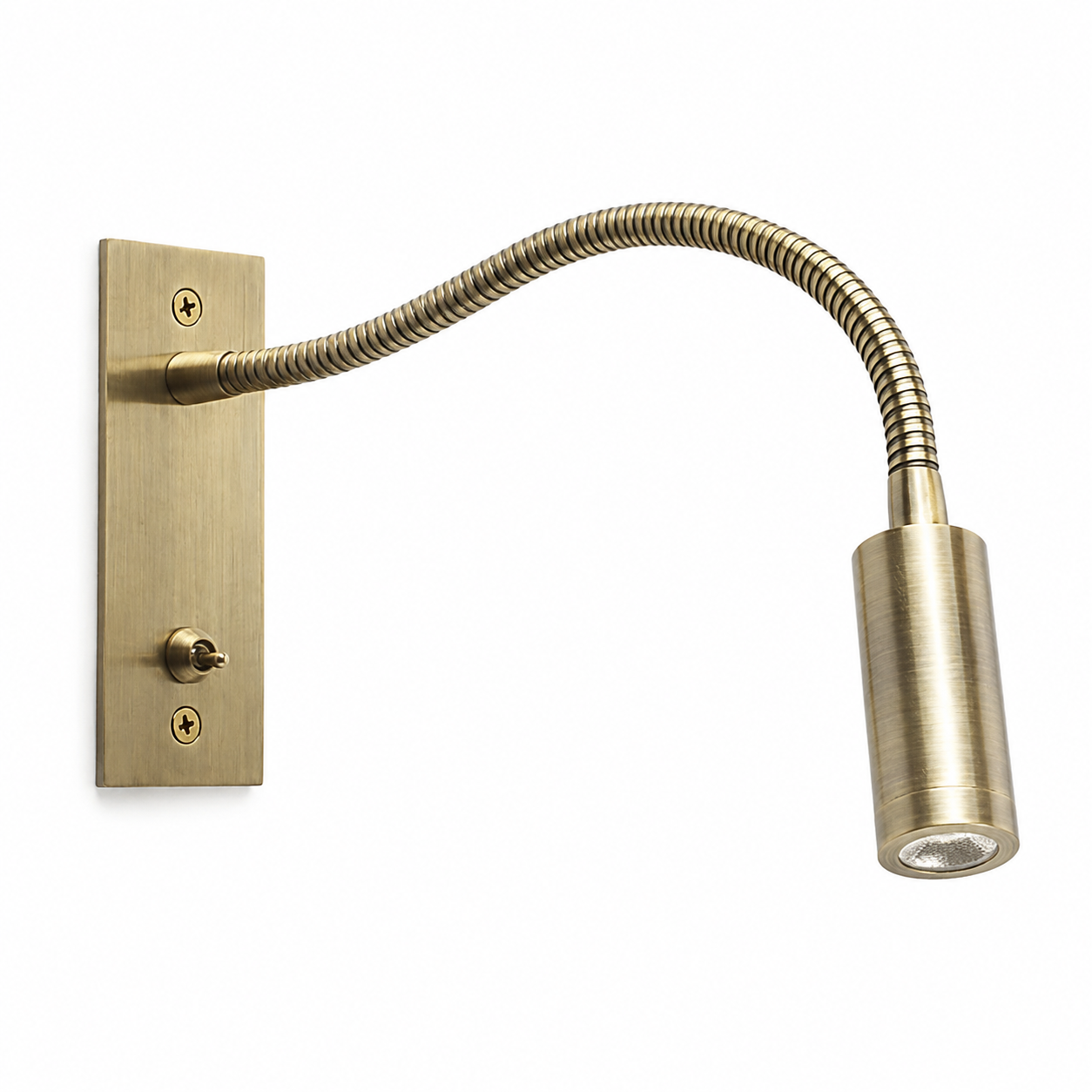
MYDE MD-WL-Y135 is described as a recessed bedside reading light. Its source pack does not confirm the cut-out or wiring method; its overall 168 × 68 × 52 mm size is not an installation opening. MD-WL-Y003 is surface mounted, but its exact project fixing and electrical documentation must still be reviewed. Do not describe either as plug-in on the current evidence.
When a plug-in design may suit the project
A correctly specified plug-in fitting may suit a room with a suitable outlet and a deliberate cable-management detail. The visible cord, plug accessibility, outlet position and potential for accidental unplugging need review. In a hotel, examine guest tampering, cleaning routines and whether the fixture can be moved or removed without damaging finishes. Confirm that the product's listing or market documentation covers its intended installation.
Do not assume “plug-in” means a quick retrofit. A poorly placed outlet or exposed cable can make the project more disruptive than a coordinated fixed connection. Conversely, a room with accessible outlets and removable joinery may offer a practical path. Compare actual room work, not a generic installation claim.
Test both guest and maintenance use
In a sample room, read from both pillows and operate the light with the room's other controls. Check the off state and any master-switch interaction. Inspect the cable or connection area after the headboard is in place. Have housekeeping and maintenance staff describe how they would clean, unplug, isolate or replace the unit. Record any tool or access panel needed.
The final schedule should identify connection type, supply voltage, switch behavior, included cable or driver, outlet or junction position, mounting drawing and destination-market evidence. Keep every unresolved detail open until the exact manufacturer's instructions arrive. For renovations, the hotel bedside retrofit guide gives a broader survey process. Send MYDE the room section and electrical brief to confirm which documented installation option applies to a proposed model.