
Quick answer
Set the mounting point from the finished bed and the actual fixture task; approve the eye line, page coverage and reach in a mock-up.
Bedside wall sconce height for hotels is set by the fixture's purpose, the finished bed and the guest's eye line. A decorative sconce that softens the wall may sit differently from a directional reading head. Begin with the mattress top, headboard edge, bedside table and seated or reclined guest position; then test the actual sample for glare, reach and light on the intended surface. A generic height above the floor can conceal a problem when mattress or furniture dimensions change. The project designer and installer should approve the final elevation, fixing and electrical details for each room type.
Decide what the sconce should illuminate
If the sconce is mainly ambient, its visible shade, wall wash and relationship to the headboard matter. If it must support reading, the page and both pillow positions matter more. Some combined fittings provide separate ambient and reading sources; specify and test both. Do not assume a translucent shade delivers comfortable book light or that an adjustable head gives adequate room ambience. The reading-light height guide treats the focused task position in more detail.
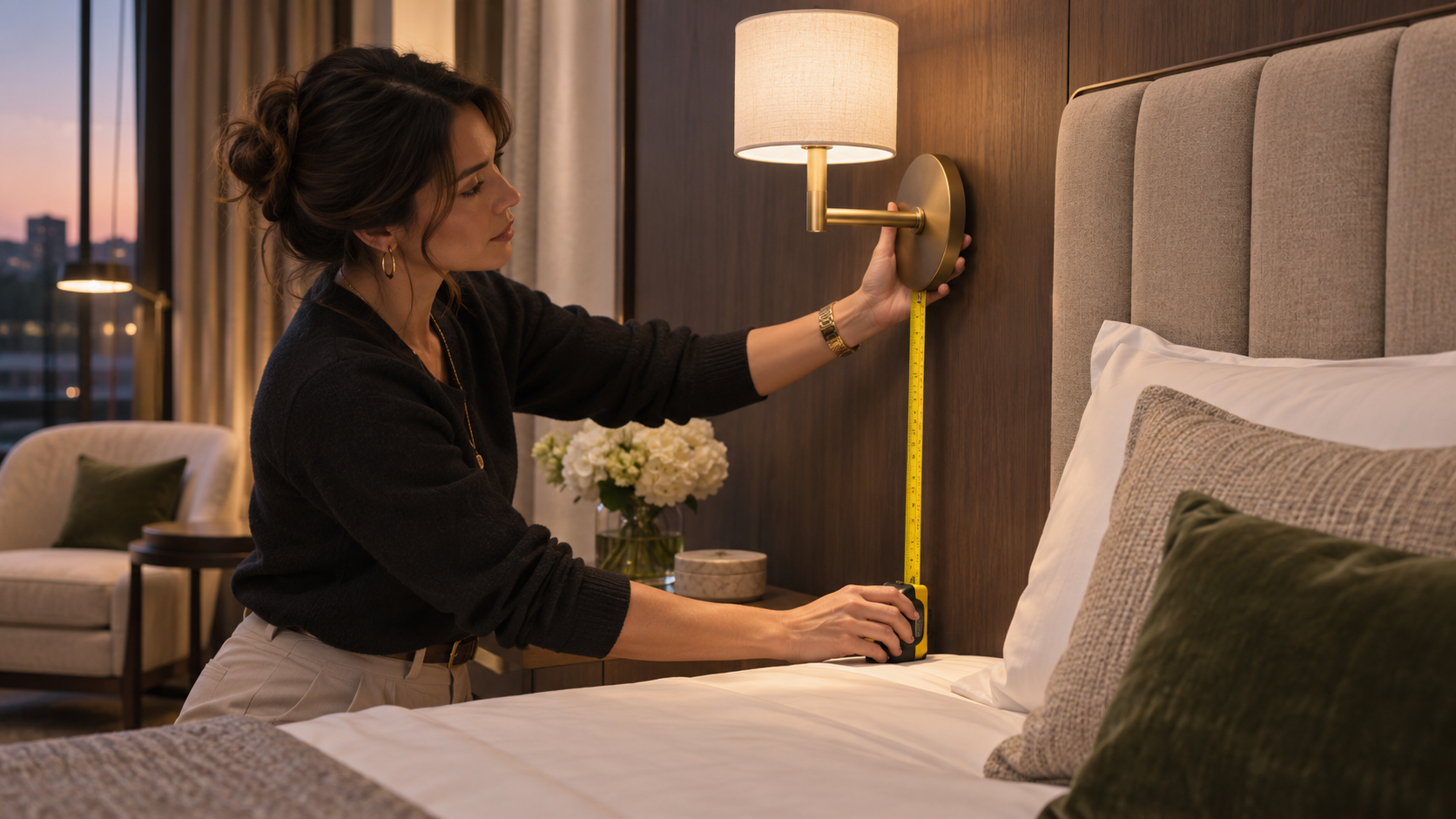
Use an elevation of the finished room rather than a bare wall. Show the top of the mattress, standard and likely extra pillows, headboard thickness, table height, artwork and nearby switches. The sconce should not be hidden by a deep upholstered panel or project into a place where a guest's shoulder or housekeeping equipment strikes it. Coordinate the visible plate with panel seams and available substrate for a secure fixing.
Test the guest's view, not just the centreline
Place a physical sample at a proposed height and view it while sitting, reclining and lying on both sides of the bed. Look for direct lamp or LED visibility, sharp reflections from metal and a bright shade in the neighbouring guest's field of view. Move the sample before committing electrical boxes or joinery openings. A lower sconce can be easy to reach yet show an exposed source; a higher one may clear pillows but fail to light a book. The right trade-off is specific to the fixture and room.
For paired sconces, check visual balance against the bed and headboard, then check each side as an independent task. Symmetry on the drawing is useful, but a side table or narrow wall return may require a reasoned adjustment. Record the actual datum and any difference between room types. Do not substitute a decorative rule of thumb for a signed mock-up decision.
Coordinate installation and control
Ask for the exact manufacturer's mounting drawing, backplate dimensions, wiring entry, supply and service route. Check that the wall or headboard can support the fitting and allow a qualified worker to reach connections later. If the sconce contains a reading head, USB port or mains receptacle, confirm its switching and charging behaviour separately. The local electrical designer must verify the destination-market requirements and circuit protection.
Test control reach from the pillow. A sconce placed for appearance may have a switch tucked behind the shade or furniture. If a separate wall switch controls it, make the label and response obvious to a first-time guest. Check the room master scene and whether a night route stays usable when the bedside light is off.
Record the approved height
Measure from a stable finished datum such as floor or mattress top and specify which one the drawing uses. Keep the actual mattress and pillow arrangement in the sample record, as these can change over a hotel's life. Photograph the sconce from eye level on both sides, not only straight on. If a substitute fitting changes shade size, light source or switch position, repeat the review.
The headboard placement guide helps coordinate the fixture with joinery. Approve the sconce height only when its intended light, guest view, reach and installation all work together.