Quick answer
There is no universal mounting height. Set a provisional centre from the finished bed and reader, then test the exact light on a book and from the other pillow before fixing repeated rooms.
How high should a bedside reading light be mounted? There is no useful universal wall measurement: set the height from the finished mattress, pillow and seated reader in the actual room. The light should put a readable pool on a book while its bright source stays out of the reader's and partner's direct view. Mark a provisional position on a full-size headboard, then test it with the selected fitting before cutting or fixing repeated rooms.
Establish the reference points
Use the finished floor level, top of the installed mattress and actual headboard dimensions on one elevation. Draw the likely upright and reclined reading positions, including pillows. Note whether the bed frame or mattress may change during procurement. A dimension above the floor can look precise while hiding the important distance between source and page.
Record the fitting's centreline, backplate outline and head position. An adjustable head changes the useful aiming range, but it cannot rescue a mounting point that puts the fixture behind the pillow or inside the reader's field of view. Review both sides of a double bed separately; the headboard's symmetry does not guarantee matching use positions.
Test light on the page and at both eyes
Temporarily mount or mock up the exact selected fitting. Have a reader hold a book or device in a natural position. Check whether the page receives useful light without a shadow from the reader's head or hand. Then move to the adjacent pillow and look for a visible bright source or disturbing spill. Test with the main room lights off, because ambient light can mask a poor bedside beam.
If the fitting aims downward, check whether its range remains usable from an upright and reclined posture. If it has a fixed optic, verify its distribution at the intended distance. Do not infer light level from a wattage label. Ask for the exact photometric data when a numerical reading-plane criterion is required and measure the installed sample.
Coordinate the position with installation
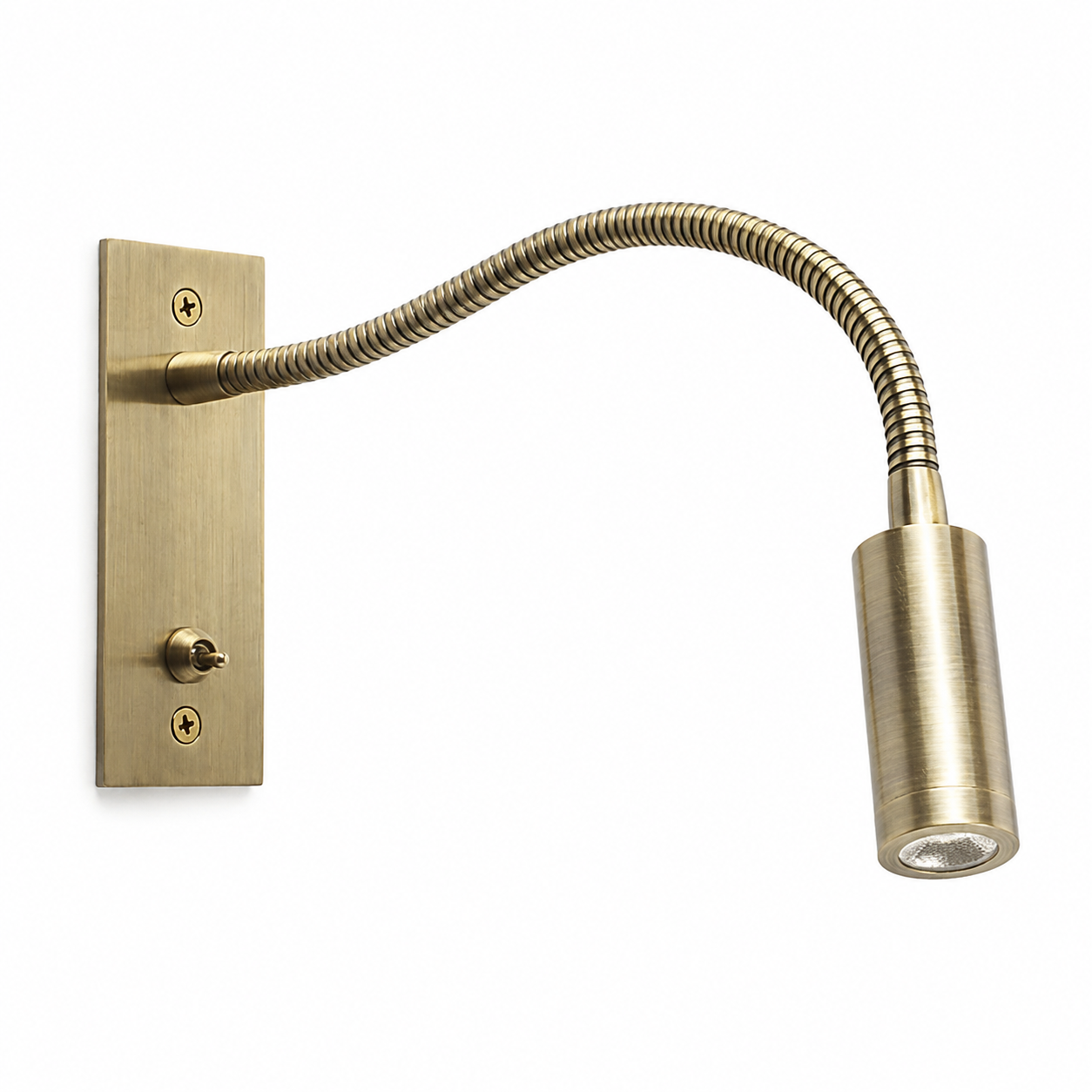
The centreline must also clear upholstery seams, structural members, cable routes and service openings. A recessed product needs verified depth and cut-out; a surface product needs backing and a compatible bracket. The MD-WL-Y135 recessed reading light is adjustable, but its published overall size is not an installation opening. Request its current installation drawing before cutting the headboard.
Check switch reach with the reader lying and sitting. A perfect light position is of little use if the guest must reach behind a pillow to operate it. In rooms with movable beds or different mattress packages, prepare separate approved coordinates. The reading-light angle guide explains the aiming review that follows height selection.
Record an approved coordinate, not a rule of thumb
Once the mock-up works, record the light centre above finished floor and mattress top, lateral offset from the bed or pillow centre, head aiming position and exact product revision. Photograph the view from both pillows with the room dark. Repeat the test if bed height, headboard thickness or fitting changes. This makes the decision reproducible without presenting one project's coordinate as an industry standard.
- Draw finished mattress and pillow positions before setting a centreline.
- Test the exact fixture on a real page from both reading postures.
- Check glare from the second pillow and switch reach.
- Freeze the approved dimension with product and room revisions.