Quick answer
Move suitable light sources off the nightstand, keep switches and power reachable, and test the resulting surface and cable layout in a furnished sample room.
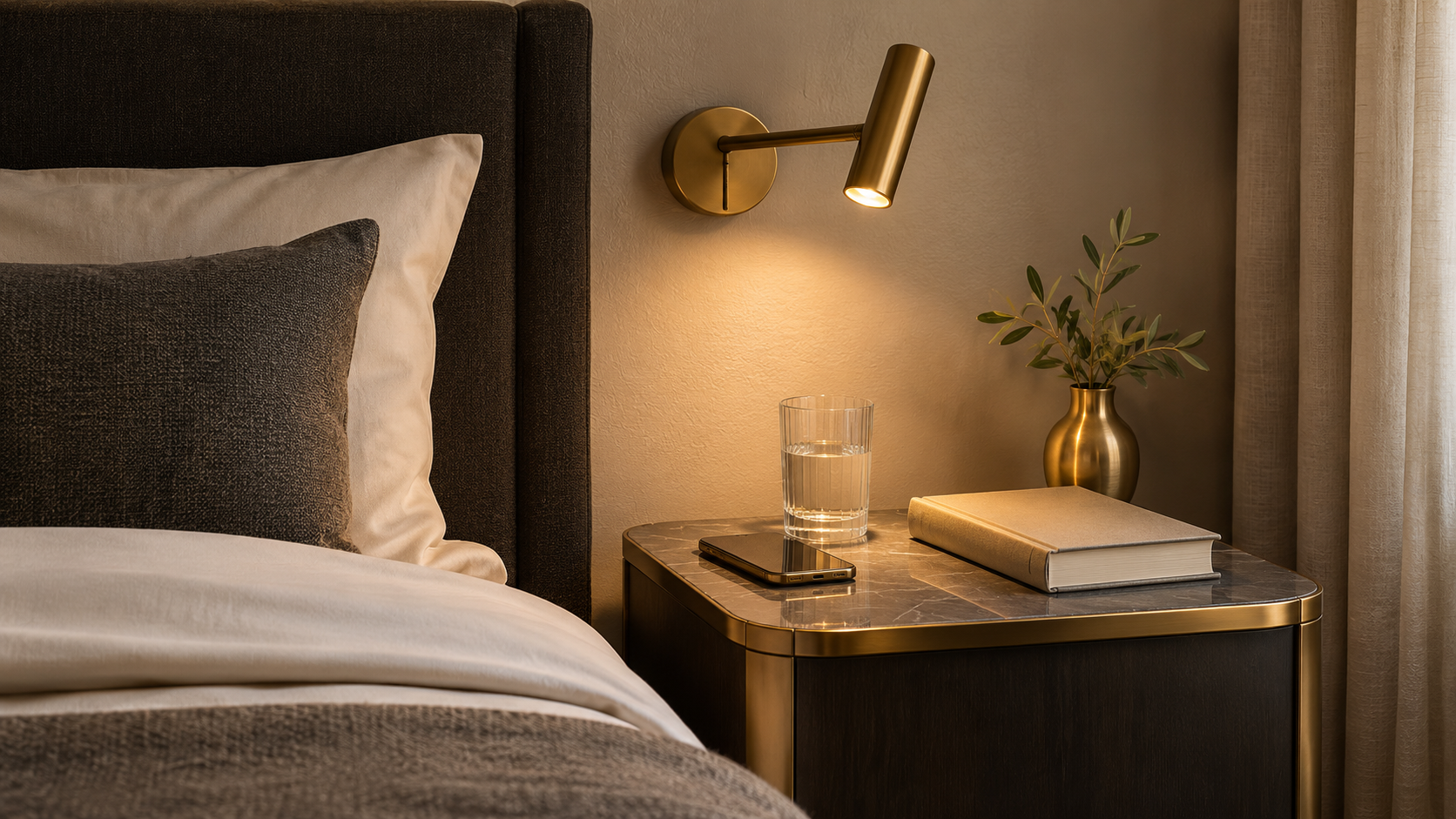
To reduce bedside clutter with wall mounted lighting, remove a lamp base and its loose lead from the nightstand only when the new wall fitting remains easy to use. The cleared surface should hold what guests actually place there: a book, phone, water and personal items. Moving a lamp to the wall can also shift the switch, cable entry and maintenance burden, so the furniture and electrical plan must change together. Test the result with the real bed and table rather than judging an empty styled photograph.
Decide what must stay on the surface
List the objects expected on the nightstand and place them on a full-size sample. Consider a phone with its charging cable connected, a drink, glasses and a paper book. Mark the safe reach from the pillow and the area needed for cleaning. If the table is narrow, a wall-mounted light may free meaningful space; if the charger or controls are moved out of reach, the room may feel less usable.
Choose a fitting that lights the book without projecting into the guest's movement path. Check the aimed and parked positions. The narrow guest-room lighting guide addresses clearance where the bed and circulation route compete for space.
Keep switching and charging explicit
A wall light does not automatically remove cable clutter. Draw how power enters the fitting and how the guest's device cable reaches the table. If a port is integrated, verify its exact connector and electrical output rather than relying on a product image. A separate wall outlet may still be the clearer solution for some rooms.
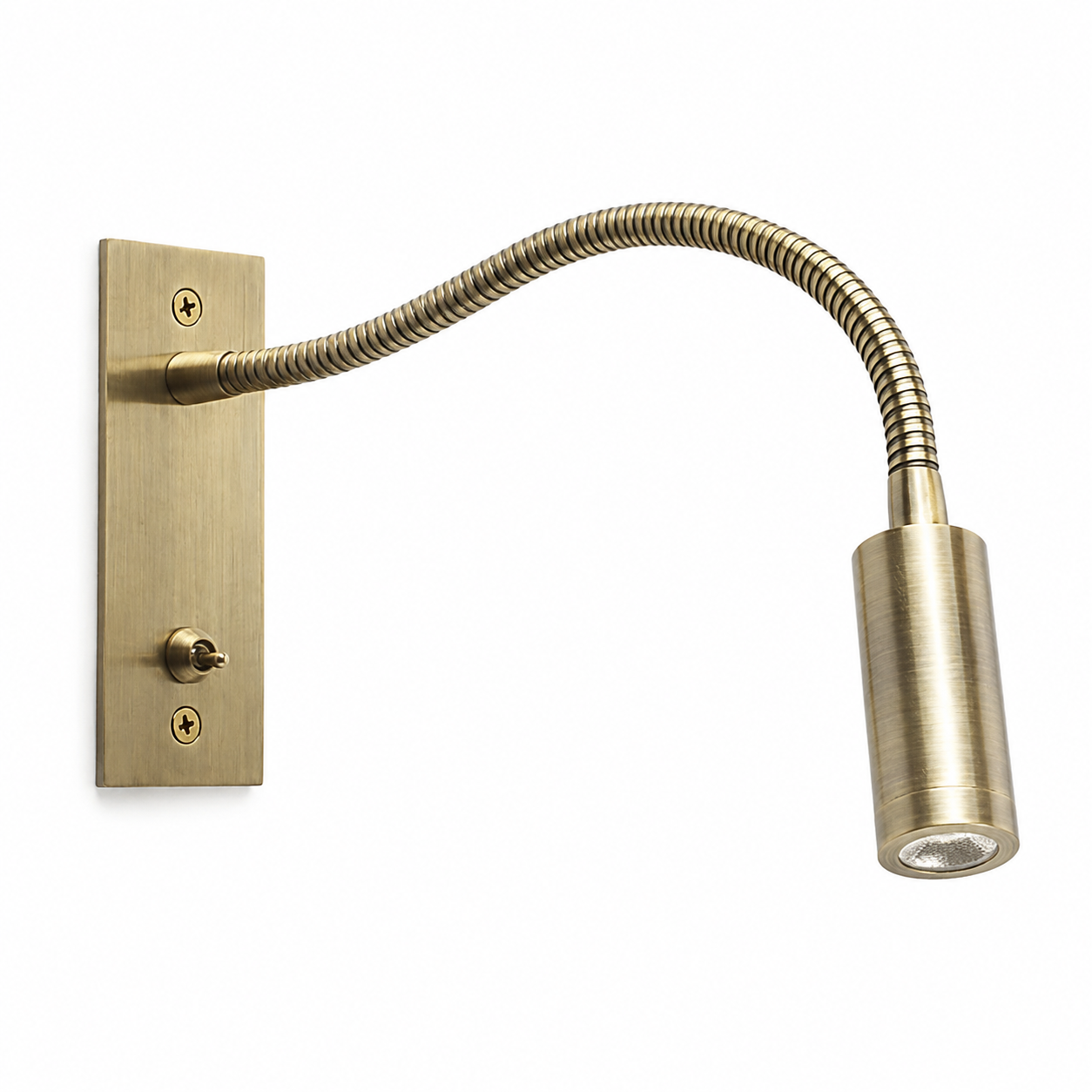
The documented MD-WL-Y003 combines a surface-mounted 3 W reading head, a physical toggle and one USB-A 5 V/2 A port. It is non-dimmable and is not a USB-C or laptop-charging promise. Compare that exact capability with the room brief. The integrated charger versus separate outlet guide helps frame the interface choice.
Balance a clear table with guest comfort
Wall lighting can make the room visually calmer, but do not mount it solely to create a minimal photograph. Sit and recline on the actual bed. Check whether the switch is reachable, the reading plane receives useful light and the source stays out of both guests' eye lines. Verify that the table can still move for cleaning without pulling a cable.
Look at the room from the door as well. A compact fitting may work better than a large decorative arm if the bed sits near circulation. Conversely, a decorative wall light may be appropriate for atmosphere but require a separate reading head. Do not make one fixture carry an untested second task.
Record the room and maintenance decision
Approve one complete arrangement with the chosen table, bed, headboard, lamp and outlet. Photograph the nightstand with realistic guest items, not just an empty surface. Note cable reach, cleaning clearance, control behavior and replacement access. Give the electrical and joinery teams the same accepted drawing.
If the operator changes the bedside table or the product supplier changes the port, repeat the clutter and reach check. The useful outcome is a surface that stays clear during ordinary use and a lighting system that staff can maintain without dismantling the room.