Quick answer
Map daily tasks in each serviced-apartment zone, provide independent controls and approve a furnished unit before repeating the plan.
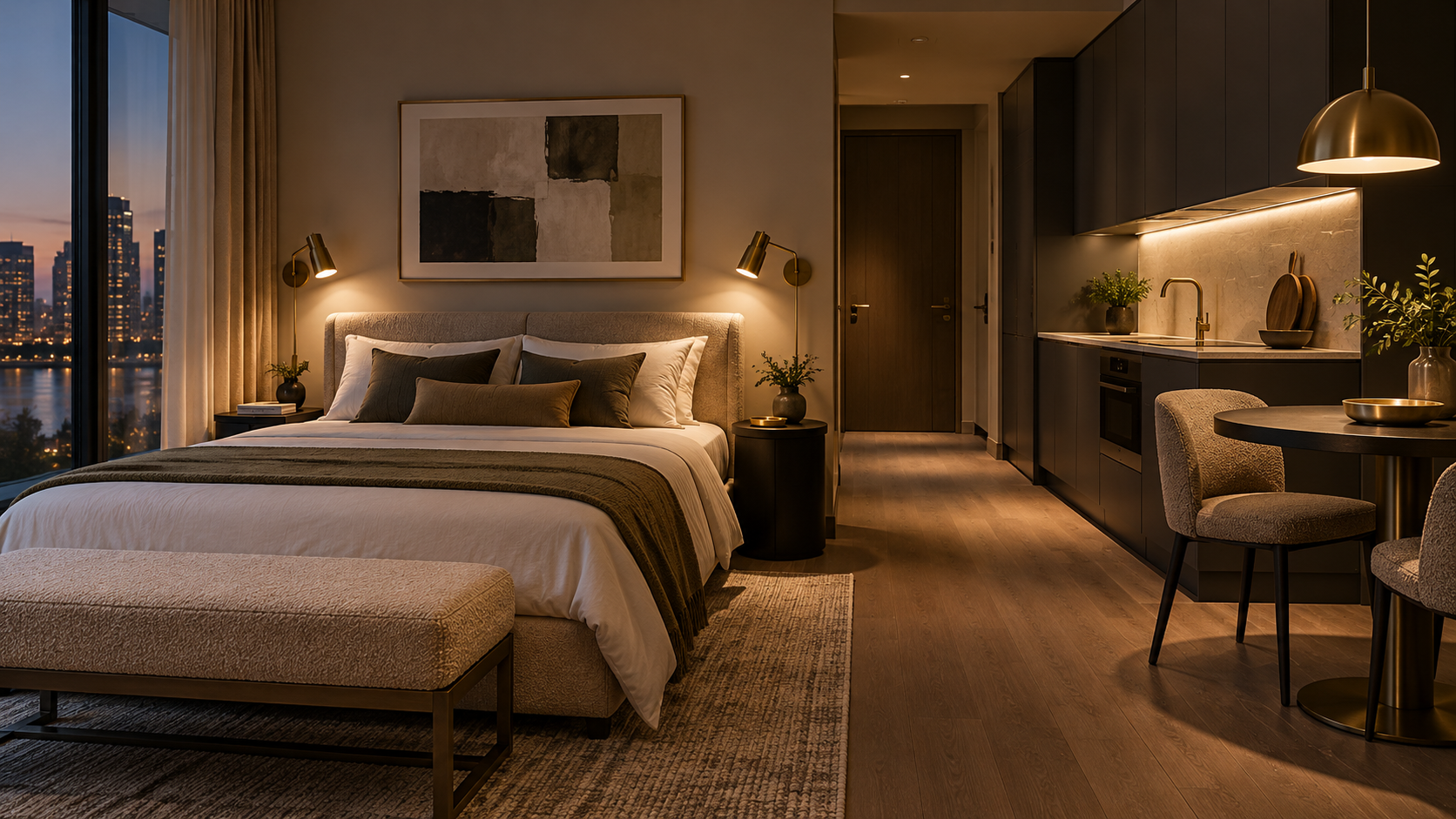
Hotel lighting design for serviced apartments should support repeated daily tasks, not only a short overnight stay. Plan the bed, work surface, dining area, kitchenette and storage as distinct zones, then give guests understandable controls for each. A longer stay makes poor task light, hard-to-find switches and inaccessible replacement parts more noticeable. Draw the actual furniture and electrical layout first, test a furnished unit for daytime and evening use, and record the approved fixture versions for maintenance.
Map the longer-stay routine
Walk through arrival, unpacking, meal preparation, dining, work, reading and night movement. Identify where a guest needs to see detail and where gentle background light is enough. The kitchenette may require its own task lighting and electrical review; a decorative pendant over a dining table cannot automatically serve the preparation surface. Keep room-specific safety and code decisions with the qualified designer.
Unlike a single guestroom scene, a serviced apartment may have two people doing different things simultaneously. One may work at a desk while another reads or rests. Independent control prevents the whole unit from being forced into a single brightness setting.
Coordinate the bed and work zones
At the bed, test the reading plane, eye line and neighboring pillow with the selected fitting. At the desk, check a paper document and screen from the chair. If a table doubles as dining and work space, test both layouts rather than assuming the same lamp position covers them. The reading and working guide provides a useful task script.
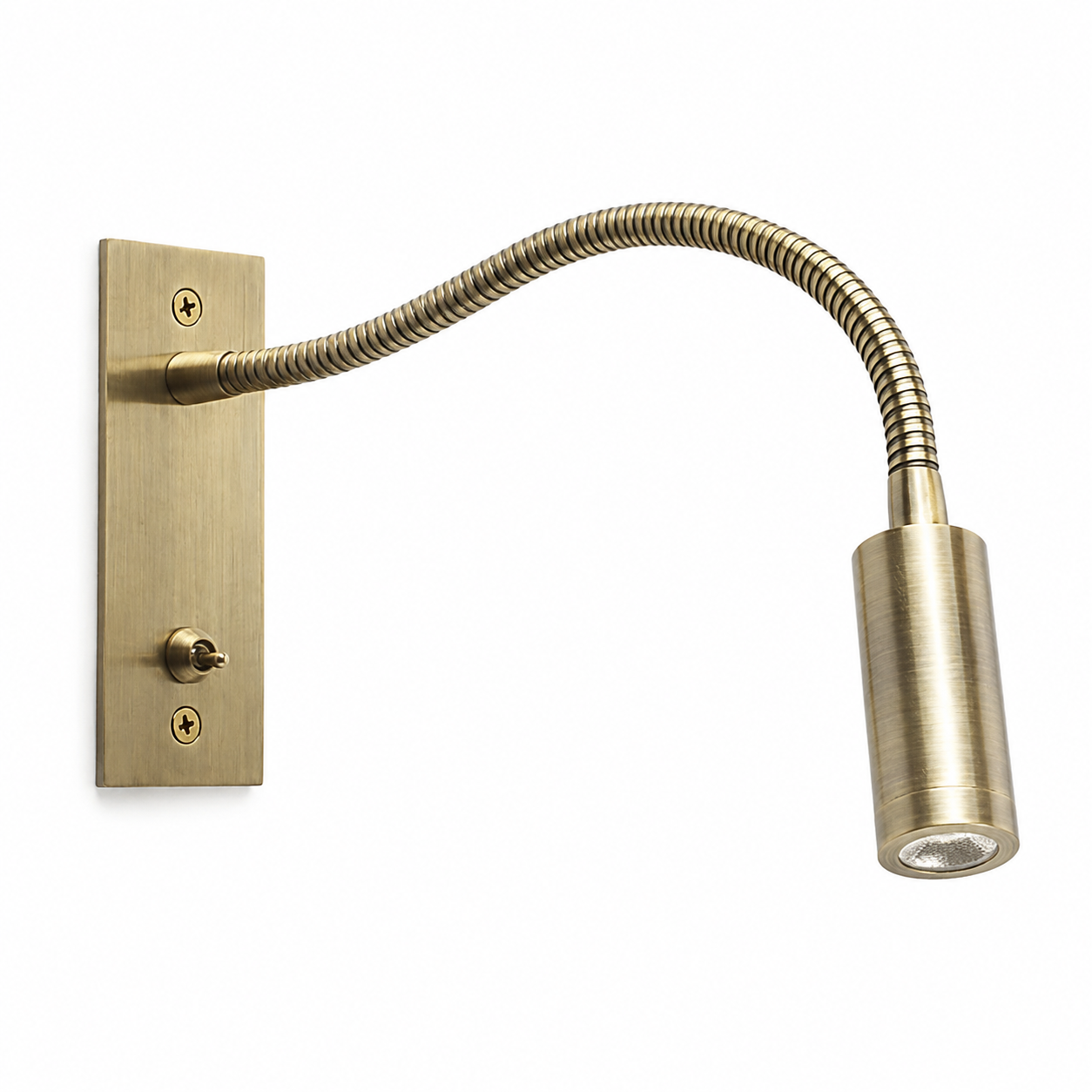
The documented MD-WL-Y135 is a recessed adjustable reading head; MD-WL-Y003 is a surface-mounted reading light with a physical toggle and a USB-A port. Their mounting formats imply different joinery and service questions. Neither product pack proves what illuminance either will deliver in a particular apartment. Request exact product data and test the chosen version in the unit.
Make controls and charging intelligible
Place switches where a guest naturally expects them at entry, bed and work area. Check how the master switch interacts with task lights and any powered outlet. A guest staying several nights may use the charging location daily, so test reach with the finished mattress, side table and phone cable. Specify connector type and output from verified product documentation, not the appearance of a port.
Do not assume every bedroom luminaire supports dimming. If evening scenes are required, match the driver and controller to the chosen fitting and test the low end. Record the setting that was approved rather than relying on an unspecified scene name.
Plan for repeat maintenance
Identify how a damaged fitting or driver is accessed without harming finished joinery. Keep a record of exact model, finish, optic, driver, control and approved sample. Ask how replacements will be matched if a component changes during the operating life of the apartment. This is a procurement question, not a promise about a supplier's spare-parts inventory.
Approve a representative unit for each distinct plan. Then walk an actual delivered unit after installation. Compare switch locations, beam aiming, charging access and all-off behavior with the signed reference before releasing the remaining units.