
Quick answer
Freeze the approved sample, validate repeatable processes and first articles, and control any later component or finish changes.
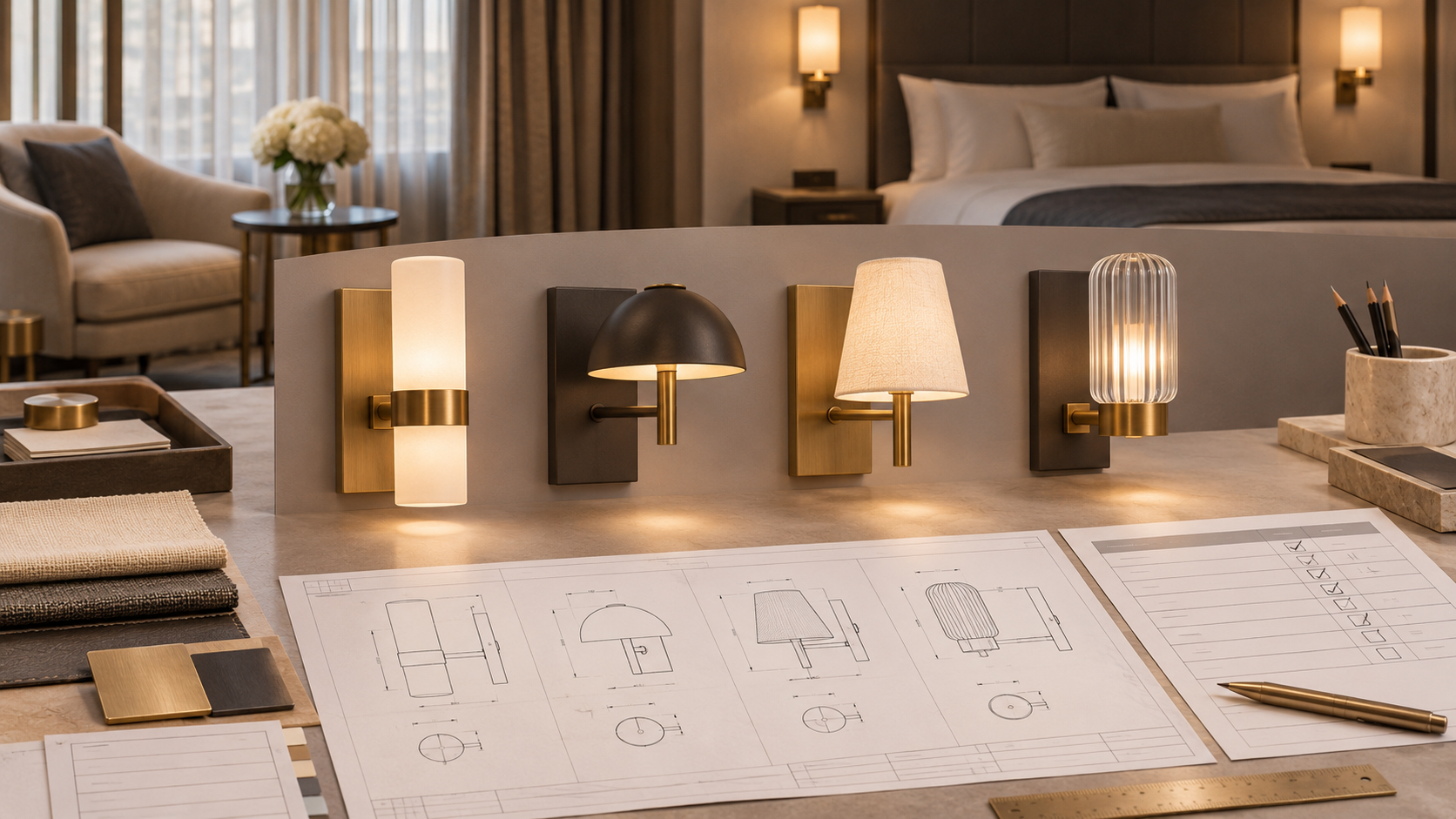
To scale a custom wall light from prototype to mass production, freeze the approved function and appearance, then prove that the chosen production process can reproduce them. A hand-adjusted sample is evidence of design intent, not evidence of routine yield, interchangeability or market compliance. The buyer and supplier need a controlled drawing set, bill of materials, finish reference, inspection plan and change procedure before repeat orders begin. Build and examine an early production unit against the accepted room sample. This guide focuses on the scale-up decision after prototype approval; the prototype development guide covers earlier design experiments.
Separate prototype tricks from repeatable operations
Ask which prototype parts were hand-finished, sourced temporarily or adjusted during assembly. A skilled technician can make one housing fit by filing a bracket; that is not a defined production method. Identify processes for every visible and safety-relevant part, including machining, cutting, forming, coating, wiring and final assembly where applicable. Document the exact material and component suppliers, but do not claim one particular process is used by MYDE without a project record.
Translate each approved feature into a measurable requirement. A visual seam needs an acceptance reference; a moving head needs a repeatable fit and test; a reading optic needs the same component and aiming range; a driver needs approved electrical compatibility and access. Avoid tolerances so vague that inspection cannot reject a bad unit, or so tight that the actual process cannot hold them.
Build a production-intent first article
The first article should use the proposed routine materials, tools and workers rather than a special hand-built route. Compare dimensions, finish, optical result, controls, assembly and label with the signed sample and final drawings. Inspect parts after finishing as well as before, since coating can alter a mechanical fit. Test installation in a representative headboard or wall bay. Record deviations and who may approve them.
If a supplier changes LED board, driver, optic, socket or charging module, revisit performance and destination-market evidence. A component test from the prototype may not cover the revised assembly. The local electrical reviewer should confirm the applicable standard and instructions for the final version. Keep the first-article record with the purchase configuration, not in an unrelated quality folder.
Plan inspection across a lot
Agree what is checked on every unit and what is sampled. Visible finish, model label, basic electrical function and packing may need different inspection methods from critical dimensions or photometry. Define sampling method and response to a failure before the run starts. A defect discovered in one carton should trigger traceability to its material and production lot, not just a cosmetic touch-up on site.
Use a retained master finish and complete luminaire sample. Compare later batches under consistent lighting and viewing conditions. If the hotel is built in phases, keep the approved variant and substitution history accessible to the next procurement team. The finish-consistency guide sets out the visual reference method.
Make installation and service part of scale-up
Packaging must protect the visible surface and keep left/right or room-specific variants identifiable. Give installers the current drawing, safe handling notes and a route for reporting unexpected wall conditions. Plan spare drivers, modules or complete units according to actual serviceability; do not promise a lifetime or availability period without a supplier commitment. Record how a later replacement is compared with the original room sample.
Release questions
- Does the first production unit match the approved room sample and revision?
- Which prototype adjustments have been replaced by controlled operations?
- Are market documents, labels and instructions for the final assembly current?
- Can each unit and later replacement be traced to its component and finish lot?
- Who approves deviations and process substitutions before shipment?
Scale-up succeeds when the approved guest experience can be built and inspected repeatedly, not when the factory merely promises that a prototype can be copied.