
Quick answer
Approve a custom lighting sample against its drawing revision, component list, finish reference and room test, then record any accepted deviations and required retest before production.
How to approve a custom lighting sample is to compare one identifiable prototype with a controlled brief, drawing and component list, then record exactly what has passed. A sample may prove appearance but not electrical safety, thermal behavior or production repeatability. Decide its purpose before inspection. Review size, finish, emitted light, control, mounting and service access under the conditions in which the fitting will be used. Note any deviation as an open action or an accepted change with a revision. A verbal “looks good” is too weak a basis for repeating a custom wall light across rooms.
Identify what the sample represents
Label the sample with its model or project code, revision, date and intended approval stage. Is it a visual mock-up, a working engineering prototype or a production-intent first article? List temporary components openly. A finish coupon can approve colour and texture, but it cannot approve a complete wall-light assembly. A working prototype with an unapproved driver cannot settle the final electrical configuration.
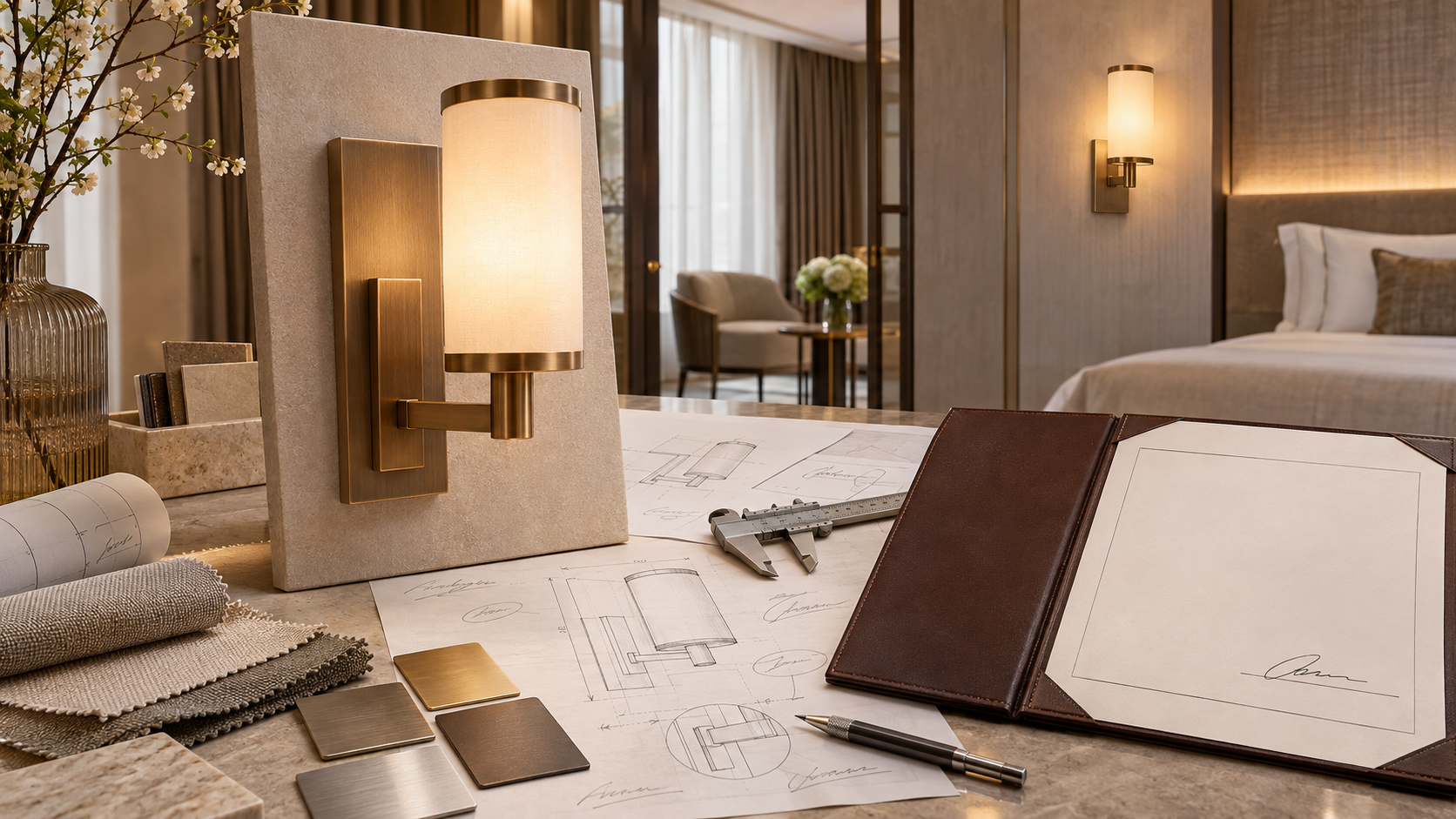
Collect the current drawing, bill of materials, finish reference and target room location before the review. Keep old revisions out of the decision folder. The custom finish process guide covers finish-specific comparison; this article covers the sample as a whole.
Inspect appearance and function separately
For appearance, compare overall proportions, visible seams, shade or optic, finish colour and surface quality beside the room materials. View the light on and off, from standing and seated positions. A phone image can support the record but changes in camera exposure and white balance make it a poor sole colour reference. Keep a physical approved sample or controlled reference when finish matching matters.
For function, install the sample at the proposed height and distance. Read from the bed, inspect glare from both pillows and run the intended room scenes. Operate every switch or movable head, check parked position and cleaning access. If the sample includes a charging port, verify connector type, documented output and behavior with the light off. Do not infer a capability from appearance.
Check the installation and evidence package
Ask the qualified electrical team to review the exact supply, driver, protection, wiring method and destination-market documents. Confirm the mounting bracket or cut-out, fixing substrate, cable path and removable access. If any of these are provisional, state what later test or drawing will close the issue. A custom shape does not excuse missing installation instructions.
Performance claims need their own evidence. A beam photograph is not photometry, a component certificate is not necessarily approval of the complete luminaire, and an LED package lifetime number is not a finished-product warranty. Request the relevant report for the final ordered configuration where the project requires it.
Make approval a controlled release
Use a decision sheet with item, observed result, pass or fail, action owner and due date. Record which deviations are accepted and whether they change price, lead time or another drawing. Sign the exact sample and revision that procurement will use; retain it for comparison with first production. The room prototype specification guide explains the full-room test context.
If the supplier changes an optic, driver, finish process or mounting detail after approval, decide which checks must be repeated. Do not silently treat the revised unit as identical. A reliable custom approval names its boundaries and gives production and site teams a clear reference.