Quick answer
Choose the driver location from the approved luminaire, room cavity, controls and maintenance access rather than visible size alone.
Integrated versus remote driver for bedside lights is mainly a question of space, access, heat and the approved electrical design. An integrated driver sits within or directly with the fitting, while a remote driver is installed elsewhere and connected to the LED head. Neither is automatically better for every hotel room. Compare the exact luminaire's approved configuration against the headboard cavity, cable route, maintenance access and controls. Do not assume a small faceplate proves the driver is remote or that an accessible cavity makes any driver compatible.
Check the physical installation
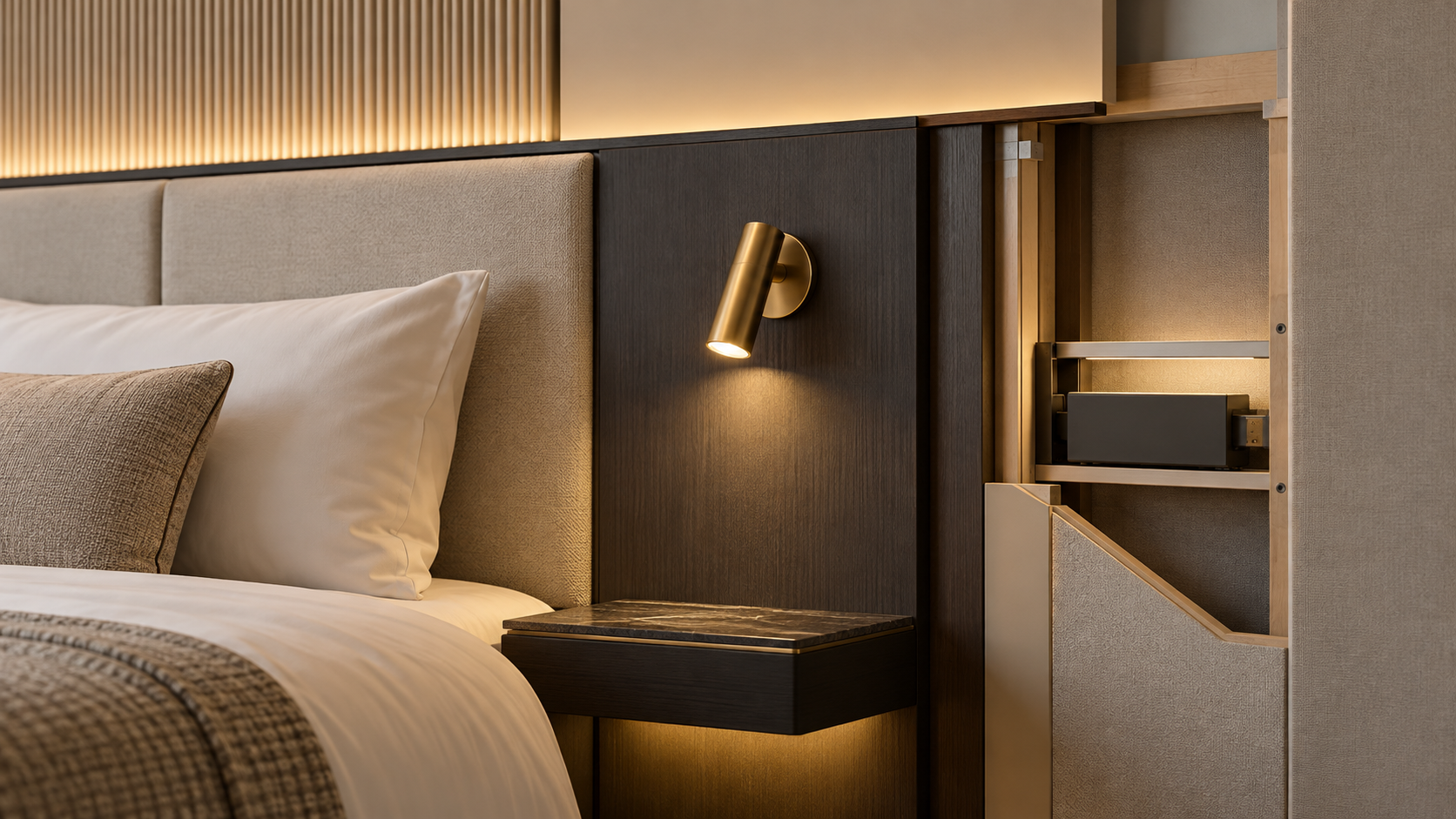
Measure the finished headboard, wall build-up and fixing depth. An integrated assembly may simplify component tracking but needs its full body to fit and remain accessible according to the manufacturer's instructions. A remote arrangement may free space behind the visible head, yet it creates a separate location, cable route and service detail.
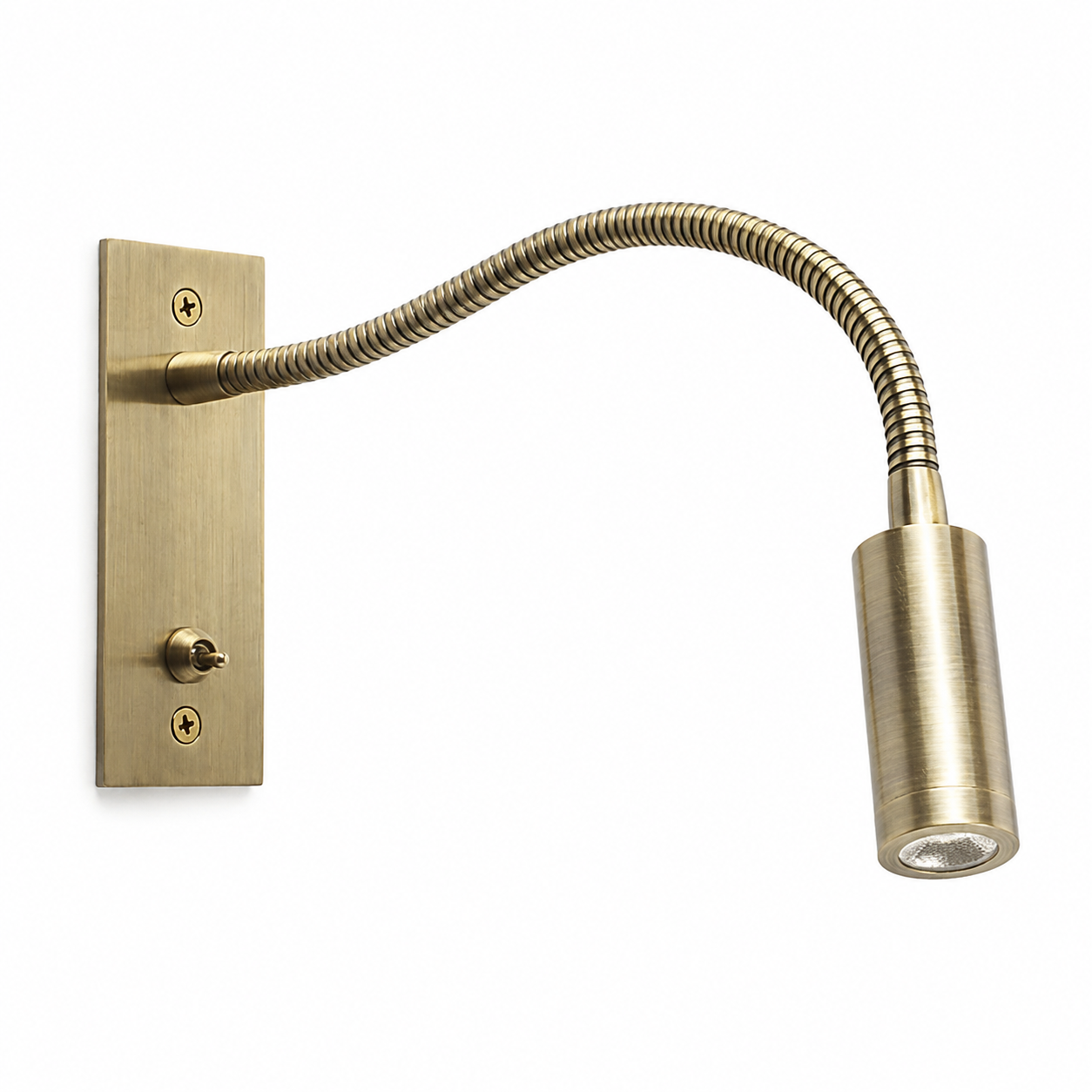
For the documented recessed MD-WL-Y135, the available pack gives overall product dimensions but does not establish the final cut-out or driver location for every ordered variant. Request a verified installation drawing before designing the joinery. Never infer the remote-driver decision from a photograph of the reading head.
Plan service before closure
Ask how each component can be reached after upholstery, timber and wall finishes are complete. A remote driver is not serviceable merely because it is outside the lamp; it must be in an approved accessible position. An integrated fitting must be removable without destroying the finished headboard. Record which team owns the access panel, spare unit and as-built location.
The hotel bedside light maintenance guide covers the operational side. Procurement should obtain the exact driver part number and replacement method, not just a general claim that components are replaceable.
Verify electrical and control compatibility
Match driver output to the LED engine, including current or voltage, operating range, power and polarity. Check input supply and local protection with the qualified electrical designer. A remote cable run may introduce length limits or voltage drop; the manufacturer must approve the arrangement. The constant-current versus constant-voltage guide explains why driver output cannot be guessed from size.
If dimming or room-control integration is required, test the exact driver and luminaire together. Observe low-level stability, off behavior, power cycling and switching at the bedside. Avoid transferring a successful test from one driver variant to another without review.
Use a controlled sample decision
Compare the two installation options against the same room mock-up: fit, cable path, heat environment, control and access. Keep a signed drawing of the selected arrangement and record any deviations on the first installed room. If a supplier changes the driver enclosure or control module, recheck the space and electrical evidence. The correct answer is an approved whole-system detail, not an isolated component preference.
The choice may differ between new construction and renovation. Existing wall cavities can restrict a remote-driver route, while a new headboard can deliberately include an accessible service compartment. Survey the actual room rather than applying the same detail automatically to both projects.