Quick answer
Evaluate an LED package with documented color and maintenance data, then verify thermal, driver and optical behavior in the complete reading light.
To evaluate LED chip quality in reading lights, examine the package data and the complete luminaire rather than treating a chip brand as a shortcut. The LED package affects color and light maintenance, but the driver, thermal path, optic and installed conditions also determine what the hotel receives. Ask for traceable component identification, test reports for the ordered configuration and a room sample. A supplier can use a reputable package yet deliver an unsuitable fitting if the complete system is poorly matched or hard to service.
Separate package evidence from luminaire evidence
Request the LED package or module part number, nominal color, binning method and relevant maintenance data. Then ask which test conditions and operating current apply. A catalog claim about the package should not be repeated as a guaranteed lifetime for the complete wall light.
The Illuminating Engineering Society position on LED lifetime explains that component tests and projections do not cover every failure mode of a complete luminaire. Drivers, optics and other parts also matter. That principle is useful for comparing quotations, but it is not a test result for any MYDE reading light. The hotel LED lifetime guide expands the system-level review.
Ask how the chip is operated
Check the driver current and whether it matches the LED module's approved range. Review the thermal path from the package through the board and housing, including the installation condition. A test on an open bench can differ from operation inside an upholstered headboard cavity. Ask the supplier for temperature and electrical evidence on the complete fitting when those results matter to the project.
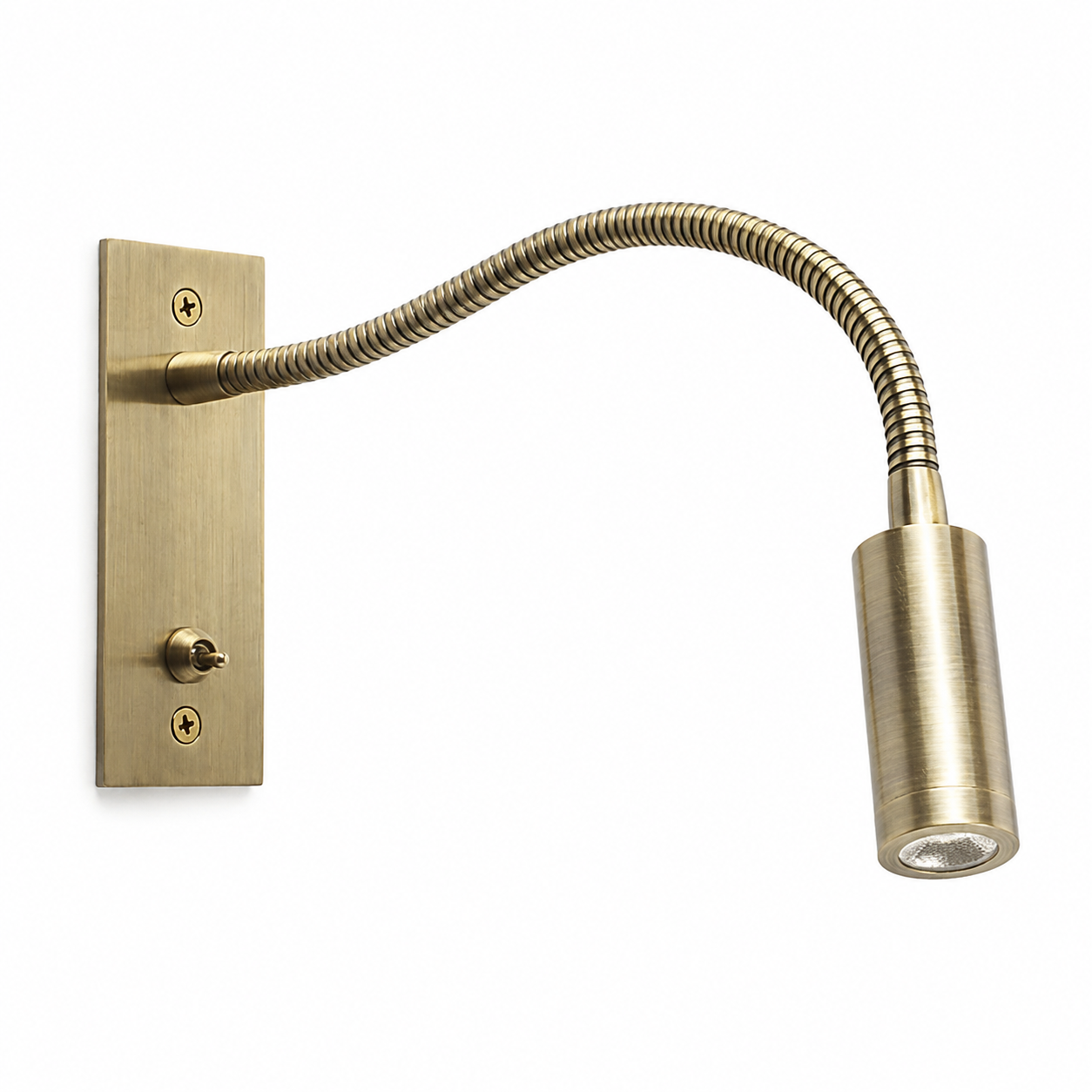
Do not infer a quality ranking from watts alone. The documented MD-WL-Y135 is a 3 W recessed adjustable reading head, but its source pack does not establish an LED chip make, thermal test result or universal lifetime. Its actual component list and complete-assembly reports would need separate verification.
Judge optical and color results in the room
Compare the exact light output and distribution at the intended reading plane. An LED package's lumen figure does not tell the buyer how much useful light passes through the final optic. Check source visibility from both pillows and whether the page remains readable without spill into the neighboring guest's space.
For multi-room work, ask for the approved color temperature, binning evidence and a replacement strategy. A batch of nominally identical fittings can still show unwanted variation against the same headboard finish. Inspect physical samples under the chosen room conditions rather than relying solely on a chip data sheet.
Make the procurement decision traceable
Use a short evidence list: package identity, driver identity, thermal report, final luminaire photometry, color data, service access and permitted substitutions. Keep the approved sample and version numbers with the fixture schedule. Ask what will be supplied if a component is discontinued and how a proposed substitute will be compared.
The strongest answer is not a named chip alone; it is a complete, repeatable reading-light assembly with measurable output and a repair plan. If the supplier cannot link the component data to the delivered fixture, mark that evidence as pending rather than filling the gap with an assumed specification.