Quick answer
Evaluate the LED, driver and surrounding headboard materials in the exact installation, using manufacturer limits and a tested sample.
Hotel reading-light thermal management means keeping the LED, driver, surrounding materials and touch surfaces within the conditions allowed for the exact fitting. LEDs may be efficient, but electrical input still becomes heat. A compact headboard cavity, upholstery or blocked airflow can change temperatures from those in an open-air product photograph. Ask for the manufacturer's installation limits and test evidence, then verify the proposed wall or headboard detail with a sample. Do not invent a safe clearance or surface-temperature limit for a product without its documentation.
Identify the heat path
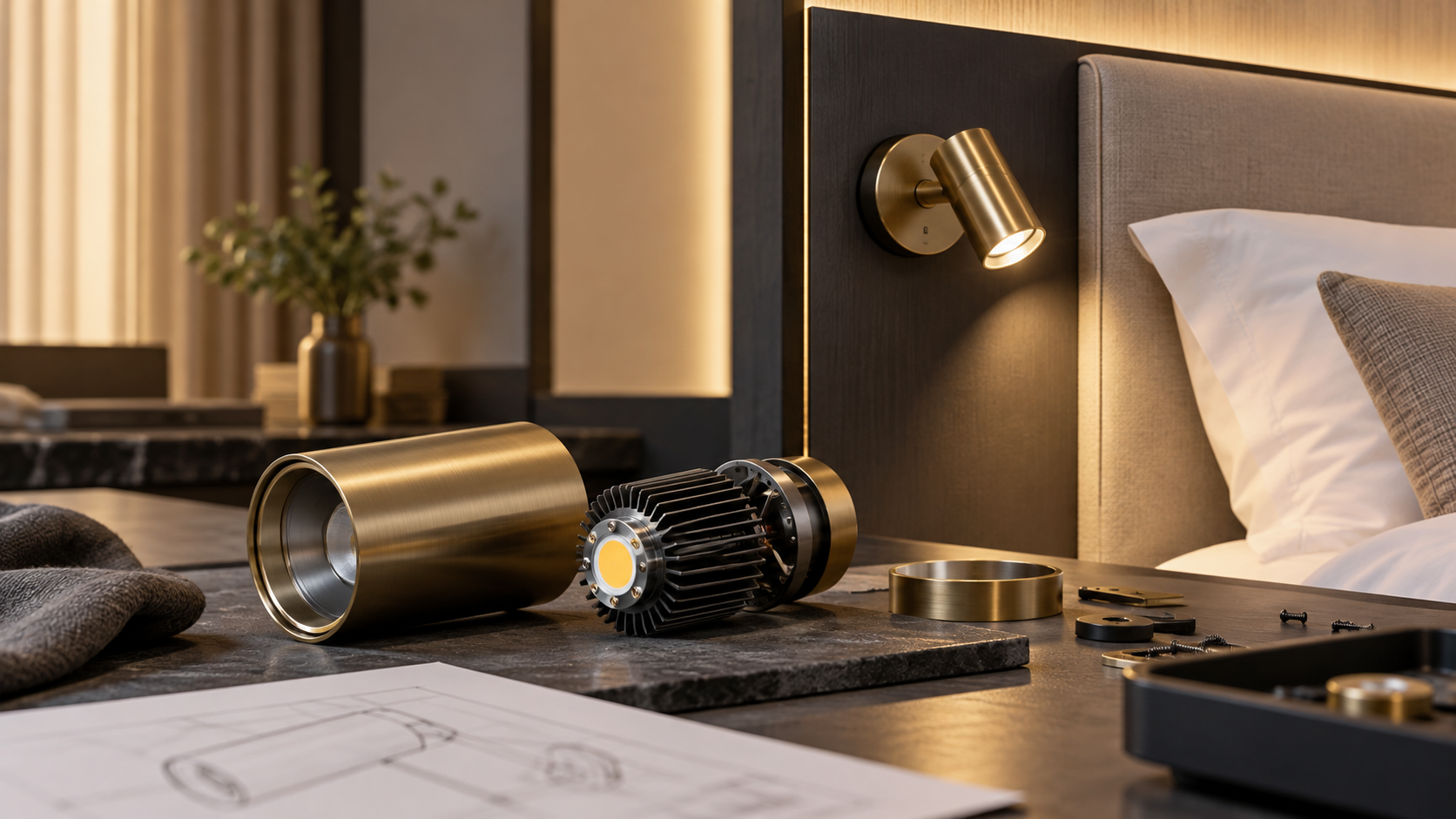
Find where the LED module and driver sit, how heat leaves the assembly and what materials surround them. Recessed and surface-mounted fittings may have different thermal conditions even when their visible heads look similar. A thermal statement for an LED package is not a complete luminaire test. The IES lifetime position also explains why source-level lifetime data cannot establish whole-product reliability.
For a headboard installation, draw the finished cavity and nearby upholstery, timber, foam or cable bundle. Confirm whether the manufacturer's instructions require specific clearance, ventilation or mounting surface. Keep fire and electrical compliance decisions with qualified project professionals and the destination-market rules.
Test the intended configuration
Use the ordered light output, driver and controls in the sample. Run the fitting in the intended mounting condition long enough for a meaningful temperature assessment under the project test plan. Measure at the locations defined by the manufacturer or project engineer; record ambient conditions and operating state. A brief touch test alone cannot prove long-term thermal suitability.
If a light is dimmed, also test full output. If an integrated USB charger or another electrical function is present, ask whether the combined operating condition was assessed. Do not assume separate catalogue tests cover simultaneous use inside the final wall assembly.
Check service and guest contact
Guests may adjust a reading head or touch a switch. Confirm that the touchable parts and control position are suitable for that use with the exact sample. Ensure that maintenance staff can replace a driver or head without disturbing thermal components or blocking designed ventilation when reinstalling it.
The hotel lighting driver selection guide helps record which electrical unit belongs to the approved assembly. Its control and output details should stay linked to the thermal installation record.
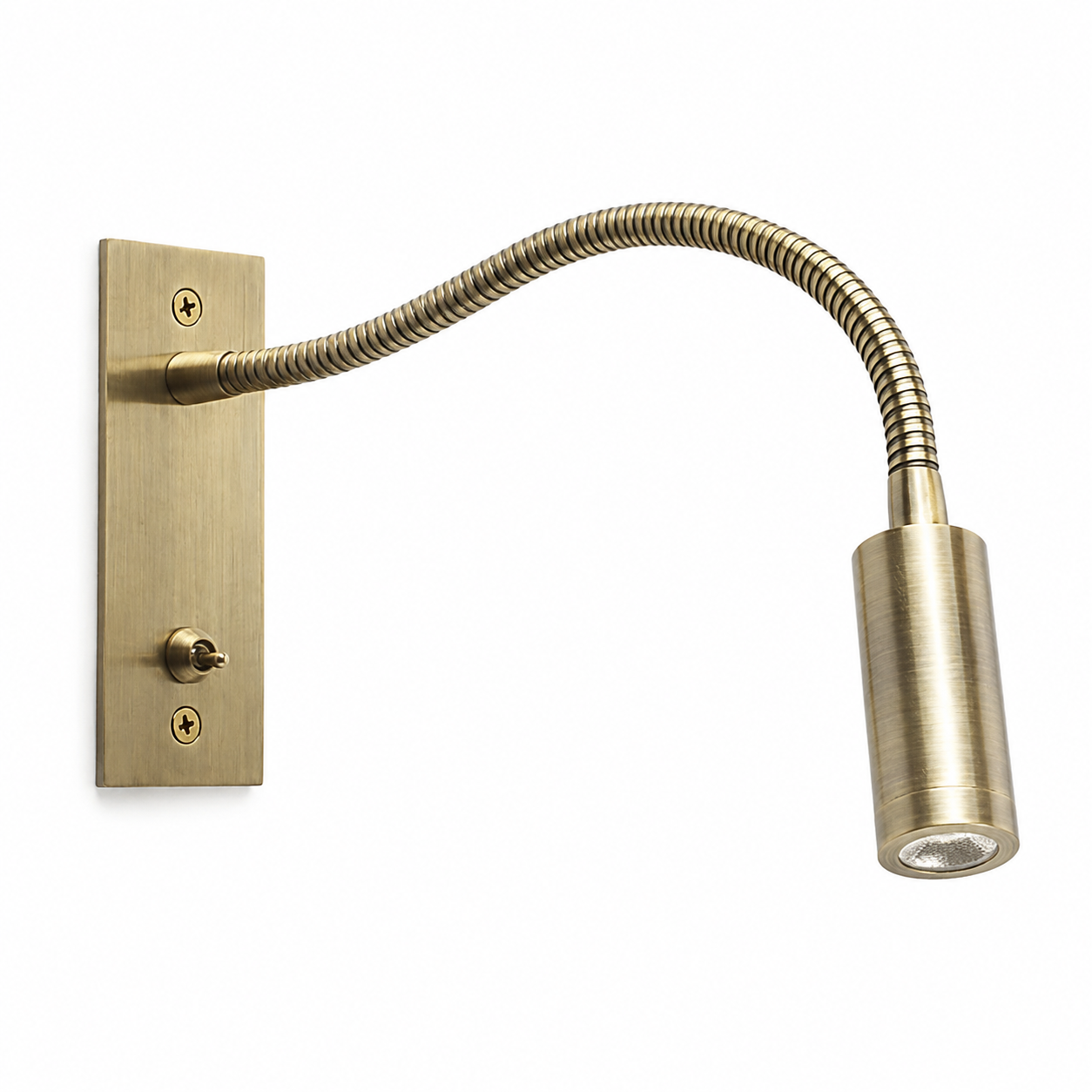
The documented MD-WL-Y092 has a flexible head and touch dimming, while MD-WL-Y135 is a recessed adjustable head. Those confirmed formats raise different contact and cavity questions. Their source packs do not establish a common operating temperature, so do not transfer a thermal conclusion between them.
Record the approved installation
Keep the sample identity, installation drawing, temperature-test conditions and any manufacturer limits together. Photograph the first installed room before the cavity is closed. A change to upholstery thickness, driver, LED module or mounting enclosure may change the heat path; review it before repeating the detail. Thermal management is a system decision tied to the real room, not an unsupported adjective such as “cool running.”
Also check the instruction for a failed or replaced unit. A replacement should return the fitting to the approved position with the same thermal contact and access conditions. Maintenance work that leaves insulation pressed against the housing can invalidate the original installation review.