
Quick answer
IP20 and IP44 describe different enclosure protection, but neither rating alone proves suitability for a location. Check local requirements and the complete product's test evidence.
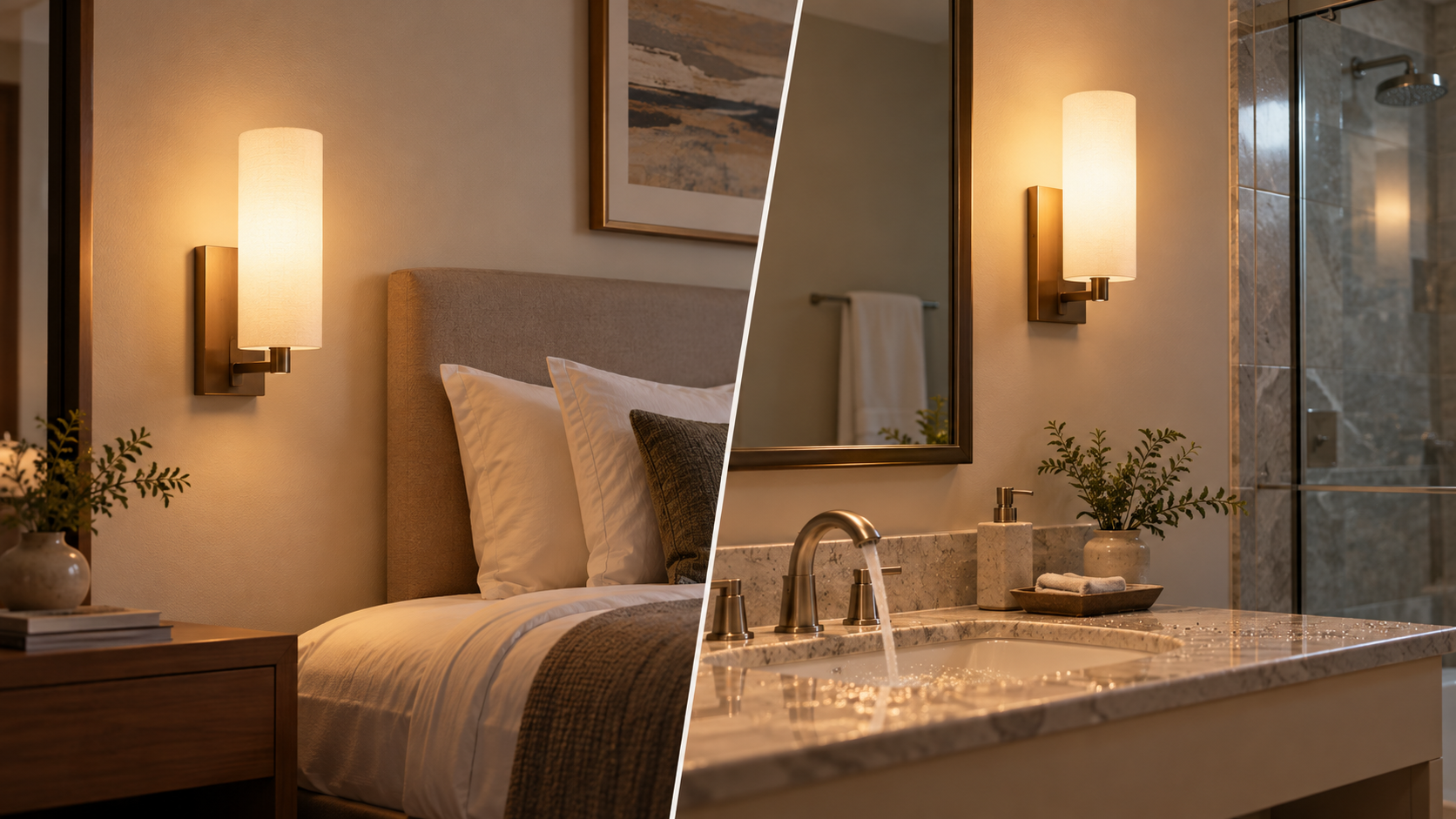
IP20 vs IP44 for hotel wall lights is a question about enclosure protection and location. The first IP digit concerns access to hazardous parts and solid objects; the second concerns water ingress. IP20 and IP44 therefore describe different levels of protection, but neither code alone proves that a fitting is suitable for every hotel wall. Ask the electrical designer to classify the actual location and applicable local rules, then verify the complete luminaire's tested rating for its intended mounting orientation.
Read the code without overextending it
The international framework is IEC 60529, which classifies degrees of protection provided by enclosures. In broad terms, an IP20 enclosure has protection against finger access and certain solid objects but no stated water protection in the second digit. IP44 adds a specified level of protection against small objects and splashing water. These short descriptions are not a substitute for the test conditions and manufacturer's installation instructions.
Do not infer that IP44 is waterproof, suitable for immersion, or automatically acceptable in every bathroom zone. The applicable requirement depends on the destination market, distance from water sources, room layout and local wiring rules. A guestroom headboard away from water and a bathroom-adjacent wall may need different decisions. The project's qualified electrical team should sign the location classification.
Verify the exact assembled product
Request an IP test report or declaration that identifies the full ordered luminaire and configuration, including lenses, ports, switches and cable entry. A rated component does not confer the same rating on the assembly. Likewise, the rating can depend on orientation, gasket, installation surface and specified connector or mounting method. Ask whether the rating applies before or after a USB port or custom finish is added.
The available MYDE bedside product packs do not establish a general IP20 or IP44 rating for all models. Do not assign one in a specification from the catalogue category or from the appearance of a sealed lens. If a particular project needs a verified rating, request the exact model evidence and record it beside the installation drawing. The hotel lighting specification template includes a field for this evidence rather than a default value.
Consider service and cleaning exposure
Think about actual use: occasional damp cleaning, splash paths and whether guests can touch the fitting. Cleaning instructions matter even when a product has an IP code. A housekeeper should not be asked to spray or immerse a luminaire because an IP44 label exists. Maintain the manufacturer's approved cleaning method and inspect seals after service or replacement.
If the project changes room layout or moves a fixture closer to a wet area, reopen the location assessment. If an installer changes a cable entry, verify that the rated assembly is still installed as tested. These are design and installation controls, not marketing claims.
Approval questions
- What does the local code require at this exact location?
- Which complete model and configuration carries the stated IP rating?
- Does the test cover ports, switches, mounting orientation and cable entry?
- Are cleaning and replacement instructions compatible with the location?
- Who checks the installed detail against the approved drawing?
Select the appropriate protection from the real exposure and verified product evidence, then record the decision in the room schedule.