
Quick answer
Survey old openings, circuits and furniture, then approve one fitted sample before ordering room-wide replacements.
To choose replacement bedside lights for hotels, begin with a survey of the existing assembly and the guest function it must preserve. A new fitting has to cover or repair the old wall condition, connect to an approved supply, fit the headboard, and provide usable light and reachable controls. Matching the external shape alone is not enough. Survey representative rooms before selecting a replacement, because earlier renovations may have left different box positions, cable routes and wall finishes within the same property. Have the local electrical and maintenance teams verify every concealed condition.
Record the existing room condition
Photograph the old light with a scale and take a dimensioned elevation from the finished mattress, pillow and wall. Note the backplate, opening, fixing points, supply location, switch type and any separate charging or mains outlet. Remove a representative fitting only under a qualified team's safe procedure; the concealed wall or headboard condition may differ from visible drawings. Record variation by room type and floor rather than assuming one sample represents the whole hotel.
Ask what failed in the old design. Was the reader unable to aim the beam? Did a switch become inaccessible after a mattress change? Does housekeeping struggle to clean around it? A replacement that merely fits the hole can reproduce the problem. The renovation selection guide covers the wider wall-light programme; this page addresses bedside replacement decisions.
Compare the new mounting interface
Request the candidate's current dimensioned drawing and installation instructions. Compare backplate coverage, depth, fixing structure, cable entry and access for a driver or connector. A larger visible plate may hide an old mark but still lack sound fixing behind it. A recessed head may need a cut-out that the existing headboard cannot safely accept. A surface-mounted design may be easier to inspect, but it can project into guest space. Have the joinery and electrical teams approve one detailed interface before buying multiples.
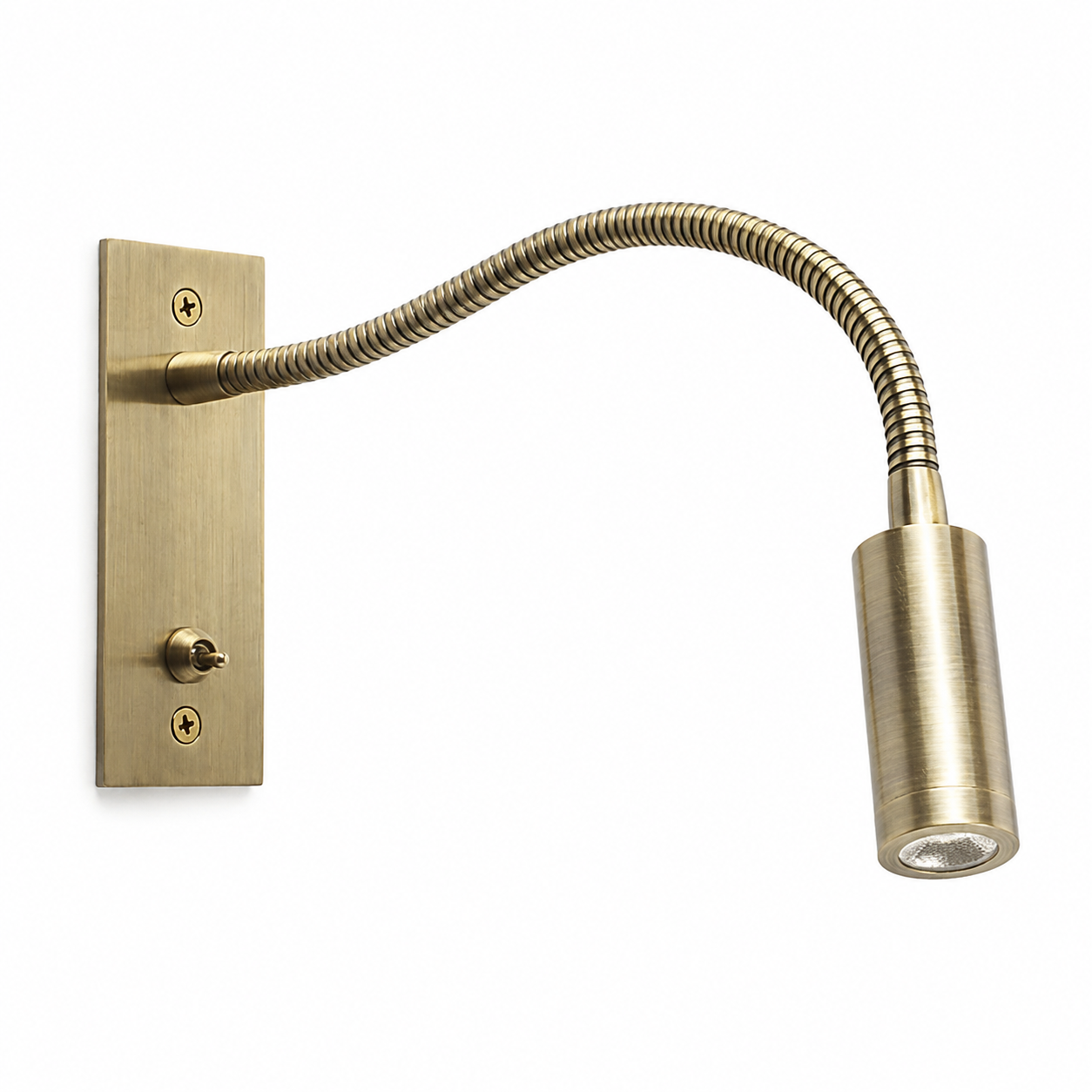
For example, MYDE's documented MD-WL-Y003 is a surface-mounted 3 W reading head with a physical BJB toggle and USB-A 5 V/2 A. Those are product-brief facts, not confirmation that it fits a particular hotel's old wall box. Verify current dimensions, supply, finish and market documents against the actual room. If the old installation contains a mains receptacle, the replacement USB port is not an equivalent electrical function.
Test the reader's experience
Install a sample beside a finished bed. Sit at both pillows, read a book, locate the switch in darkness and check glare toward the neighbouring guest. Test the most common guest positions, including an upright pillow and reclined posture. If the candidate is adjustable, confirm its movement range without striking the headboard. Where the hotel has changed mattress or bed width, use the new furniture dimensions, not those on the original construction drawing.
Check the room-control sequence and any charging behaviour. A replacement may be electrically compatible yet behave differently under the master switch or key-card system. Ensure the selected driver and dimming arrangement match the circuit. The local electrical designer should review protection, connections, ratings and applicable destination-market requirements.
Plan the maintenance transition
Order by verified room type and variant. Keep spares for the approved configuration, including visible finish and replaceable components where available. Label cartons and installation records so maintenance can trace which rooms received which revision. If a supplier proposes a substitute after approval, compare the new sample with the fitted room before accepting it. Give installers a defect-reporting route for unexpected openings, poor wall substrate or unmatched supply rather than encouraging on-site improvisation.
Replacement approval checklist
- Survey the visible and concealed condition in representative rooms.
- Check mounting and wall repair against the exact approved drawing.
- Test page lighting, neighbour glare, switch reach and control behaviour.
- Confirm local electrical evidence and replacement-part access.
- Record the sample, room type and any permitted deviations.
A successful replacement preserves guest use and safe maintenance while solving the reason the old fitting was removed.